
Plantar fasciitis is one of the most common causes of debilitating heel pain, affecting thousands every year. The good news? Surgery is rarely a necessity. Most patients achieve successful, permanent recovery with non-surgical protocols that target the fascial micro-tears and the root cause of inflammation. At The Osteopathic Center, we specialize in non-invasive solutions like regenerative medicine to help you heal faster and avoid the operating room.
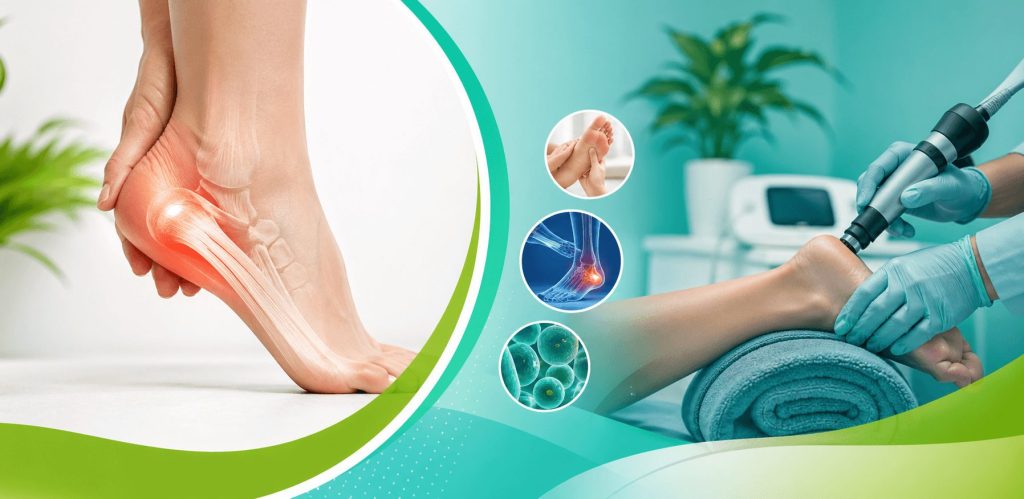
Non-surgical regenerative therapy for plantar fasciitis targeting heel pain and tissue healing
What Is Plantar Fasciitis?
Plantar fasciitis occurs when the plantar aponeurosis—a thick band of tissue connecting your heel to your toes—becomes inflamed or damaged due to repetitive tensile loading. This leads to sharp, stabbing pain, typically most severe with your first steps in the morning or after long periods of standing.
Common Symptoms and Causes
Understanding the triggers is the first step toward a customized recovery plan:
- Symptoms: Morning heel pain, stiffness in the foot arch, and increased discomfort after prolonged activity.
- Causes: Overuse, biomechanical issues (flat feet or high arches), poor footwear, and tight calf muscles (Gastroc-Soleus complex) that increase strain on the fascia.
Advanced Non-Surgical Treatments
The key to avoiding surgery is early intervention with therapies that promote biological tissue repair rather than just masking the pain.
1. PRP Therapy (Platelet-Rich Plasma)
PRP Therapy is a gold standard in regenerative podiatry. By injecting a high concentration of your own growth factors directly into the damaged fascia, we stimulate angiogenesis and collagen production, repairing the tissue at a cellular level. It is highly effective for chronic cases that haven’t responded to traditional rest.
2. Prolotherapy
Prolotherapy involves precise injections that stimulate a mild, controlled inflammatory response. This strengthens the weakened ligaments and tissues around the foot, restoring the structural integrity of the arch.
[Image showing the process of a regenerative injection into the heel under ultrasound guidance]
3. Biomechanical Support & Therapy
- Custom Orthotics: Designed to redistribute pressure and correct the biomechanical imbalances causing the strain.
- Physical Therapy: Focusing on eccentric loading and stretching the posterior chain to reduce tension on the heel.
- IV Therapy: Utilizing specific nutrients and anti-inflammatories to support systemic healing and reduce oxidative stress.
Recovery Timeline: What to Expect
While traditional rest can take months, integrated regenerative protocols often show significant improvement within a few weeks to 3 months. Unlike surgery, which involves significant downtime and scar tissue risks, these treatments allow for a gradual return to activity without the “reset” of an operation.
Why Choose The Osteopathic Center?
We don’t just treat the heel; we analyze your entire gait and biomechanics. By combining advanced diagnostics with precision-guided injections, we ensure that the healing agents are delivered exactly where the damage is most severe. Our goal is long-term relief and the prevention of future recurrence.
Are you tired of every step being a struggle?


